The collective
About
A research practice for agentic AI — grounded in real systems, documented in public.
The most interesting question in agentic AI isn't what a system can do. It's whether the system knows when it's wrong.
MAX Research Collective studies and builds systems that keep themselves honest: AI architectures with integrity checks, reconciliation loops, evals that can actually fail, and interfaces that tell the operator the truth about internal state.
The research here isn't survey work. Every note comes out of a live system — a boot sequence wired to real readiness events, a doc-sync skill that catches ledger drift, a pipeline that refuses to merge until it can prove its own state. When something breaks, that's the material.
The collective publishes field notes, architecture write-ups, and reference series for practitioners building with agents — people who need patterns that survive contact with production, not demos.
Focus areas
What we work on
Self-verifying systems
Integrity ledgers, reconciliation loops, and state audits that catch drift before it compounds.
Agentic architecture
How to structure prompts, skills, and pipelines so agents can be trusted with real work.
Honest interfaces
HUDs, boot sequences, and telemetry that show true internal state instead of theater.
Local-first AI
Resident systems that run on your machine, on your terms, with your data.
Evals that bite
Checks an agent can't route around — cheap enough to run on every change.
Practitioner writing
Field notes and reference series written from inside the build, for people who ship.
Behind the collective
About the founder
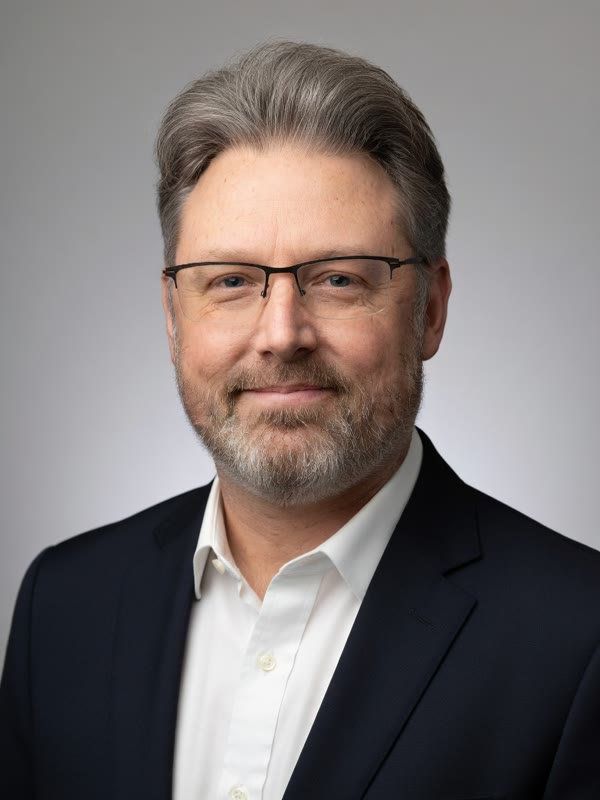
Jason Newell is the founder and principal architect of MAX Research Collective, an independent research practice focused on local-first, agentic AI and the engineering discipline required to run it in production.
He brings 25+ years of engineering leadership to that work, built at the intersection of two problems most organizations are still solving one at a time: production-grade agentic AI and regulated healthcare. Over his career he has led modernization inside a $3.1B multi-brand health plan, delivering roughly a 50% operational efficiency gain through system unification; scaled a Series A–C EHR/RCM startup tenfold; and driven a 200% platform performance improvement worth about $240K a year in savings. More recently he shipped production multi-agent orchestration that hit its delivery targets at a fraction of a pure-staffing cost model. One theme recurs across all of it: stepping into fragmented organizations after acquisition, layoffs, or production instability, and restoring reliable delivery.
MAX Research Collective is where that experience turns into original research. Its flagship is MAX3, a local-first, voice-first AI resident built as a single Python process, along with the body of work around it — including the Unified Theory and Production Blueprint for a local AI resident and the Forward-Forward Variable-Vector Agent (FF-VVA) architecture it specifies.
Jason is also the author of The Agentic AI Builder's Playbook, a 25-part published series on production-grade agentic AI architecture covering the nine-layer agent stack, MCP and A2A protocols, RAG variants, agent memory, and evaluation and observability. He writes from the same standard he builds to: real systems, honest results, and the unglamorous reliability engineering that separates a working AI system from an AI liability. He is based in Portland, Oregon.
Next step
See the work
The thesis is easiest to judge by the artifacts. Start with the projects, or go straight to the notes.